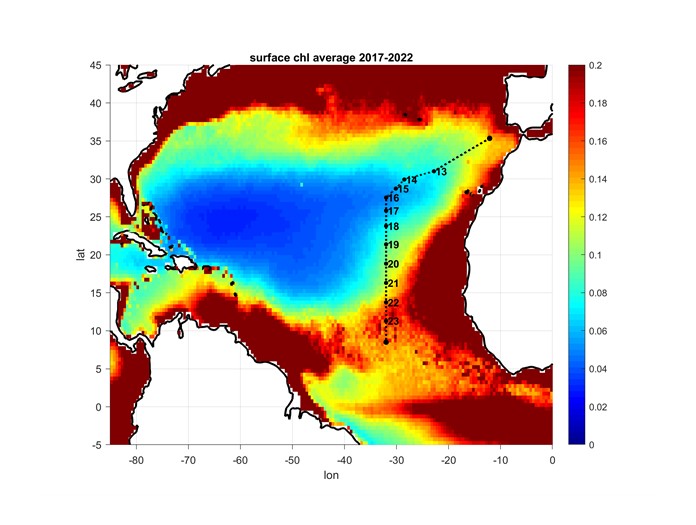
Continuing our long-running series of studies on oceanic zooplankton, we launched the 64th cruise of the R/V Akademik Ioffe in October 2023. Although the expedition team is still at sea and faces a long journey home, plankton sampling for this cruise has already been completed, allowing us to share a bit about the mission. During the expedition, we conducted deepwater zooplankton research in the tropical and subtropical Atlantic Ocean, between 11°N and 31°N. At first glance, the goal—studying deep-sea zooplankton—might seem routine. But only if one forgets that the deep ocean comprises more than 95% of the biosphere’s volume, while our knowledge of it remains strikingly limited. In fact, our understanding of this vast region is even more fragmentary than that of the still-understudied Baltic, Black, or Arctic Seas—where numerous research expeditions are carried out annually by a range of institutions.

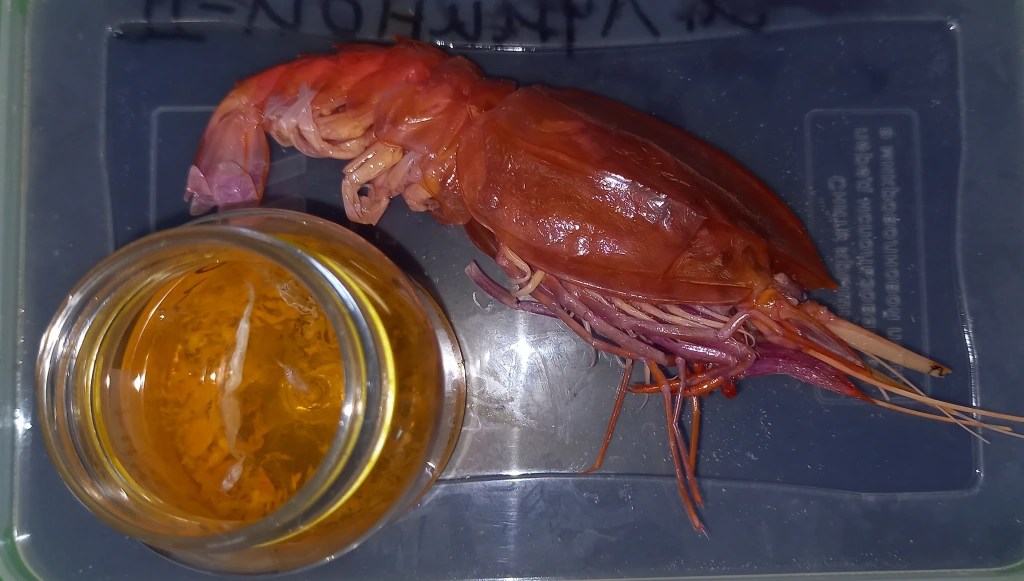
We have returned to the study of deep-sea oceanic plankton after a long hiatus — the last full-scale cruise was conducted in 2016. During previous cruises from 2012 to 2016, we managed to demonstrate a link between the biomass of major plankton groups at various depths and the productivity of surface waters, and even made preliminary estimates of the stocks of different plankton groups in the Atlantic. One of the most intriguing findings was the assessment of planktonic shrimp biomass — it turned out to be underestimated by 1–2 orders of magnitude. Surprisingly, the largest stocks of pelagic shrimp were found in the upper bathypelagic zone, accounting for 52–54% of the total biomass. Global stocks of planktonic shrimp in tropical and subtropical regions may reach as much as 1,700 million tons.
Since deep-sea operations are very time-consuming (a single station, under favorable conditions, takes about 6 hours), the material collected during 2012–2016 was rather limited. Although the results underwent peer review and were published in reputable international journals, they still required confirmation with additional data to improve the accuracy of biomass estimates and to provide more detailed information by depth and region.
The pause in our research cruises on RAS vessels from 2016 to 2023 seems unreasonably long — and we agree. The Ministry of Science and Higher Education, which has been overseeing the “review process” for cruise proposals, had not found the opportunity to support our applications until recently. However, the Russian Science Foundation (RSF) did — thanks to funding from five grants, we were able to organize three expeditions on private yachts in the Atlantic and Indian Oceans, during which plankton was collected from depths of up to 1,500 meters.
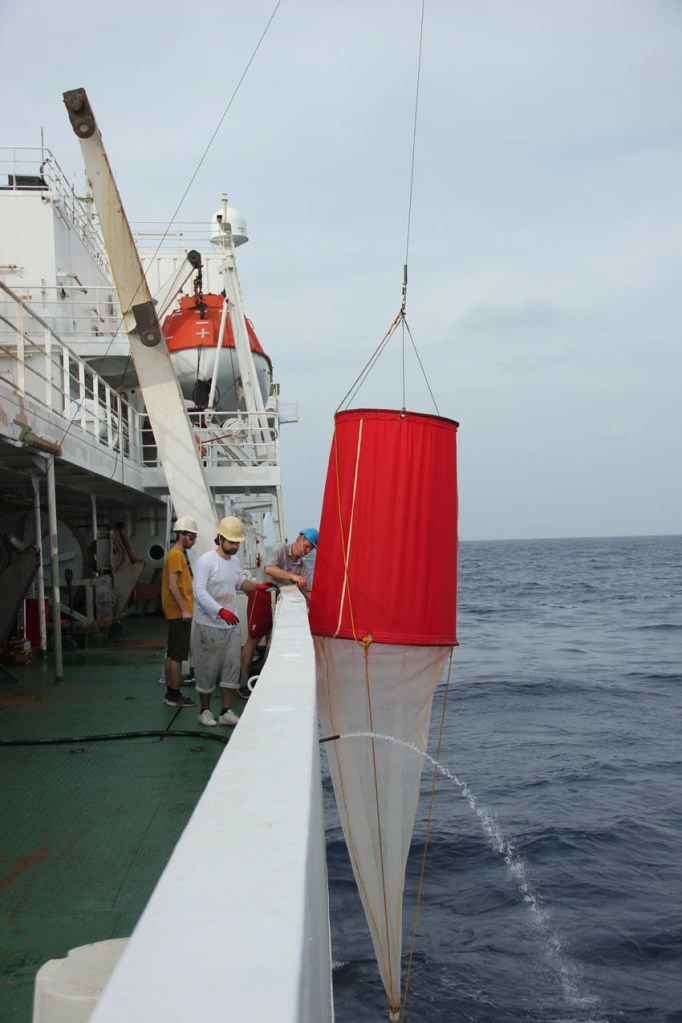
This year, our proposal was finally approved. The 64th cruise of the R/V Akademik Ioffe was organized — a vessel capable of sampling plankton at depths greater than 1,500 meters, which marks the limit for small yachts. In a relatively short period (28 days), half of which was spent transiting to the study area, we collected 64 samples down to depths of 3,000 meters at 11 full 24-hour stations.These 24-hour stations involve sampling zooplankton at one location across different depth layers during both day and night. This approach is used to assess the diel vertical migration of biomass — most plankton inhabiting the 200–1,500 m depth range ascend toward the surface at night and descend again during the day. This phenomenon drives numerous processes of scientific interest: the structure of planktonic communities changes drastically, and a cyclical flow of carbon enclosed in the bodies of migrating organisms is generated, among others.
An important aspect of the cruise was the transect across water masses of varying productivity, aimed at better understanding how deep-sea plankton responds to changes in surface productivity. A separate focus was the study of biodiversity, systematics, and evolution of marine fauna: each year, we describe new species and genera of planktonic shrimps and krill.A significant contribution was also made by hydrographic profiling led by A.N. Demidov, which extended down to 3,000 meters. These measurements provide essential context about the abiotic conditions in the areas where biological samples were collected.
The main results of our plankton studies, as usual, will only become clear after the samples are processed — a task that is done manually. In tropical and deep-sea samples, the number of different species we identify can reach up to four hundred. While the more abundant species provide insights into plankton biomass and stock assessments, it is the rare species — which constitute the majority — that reveal the finer details of the structure and spatial distribution of deep-sea plankton communities.
Nonetheless, one clear result has already emerged: the dominant role of shrimp in deep-sea communities across waters of varying productivity has once again been unequivocally confirmed. In nearly every haul, we found one to three large shrimp whose biomass exceeded that of the rest of the zooplankton combined.
 Laboratory of Plankton Communities Structure and Dynamics