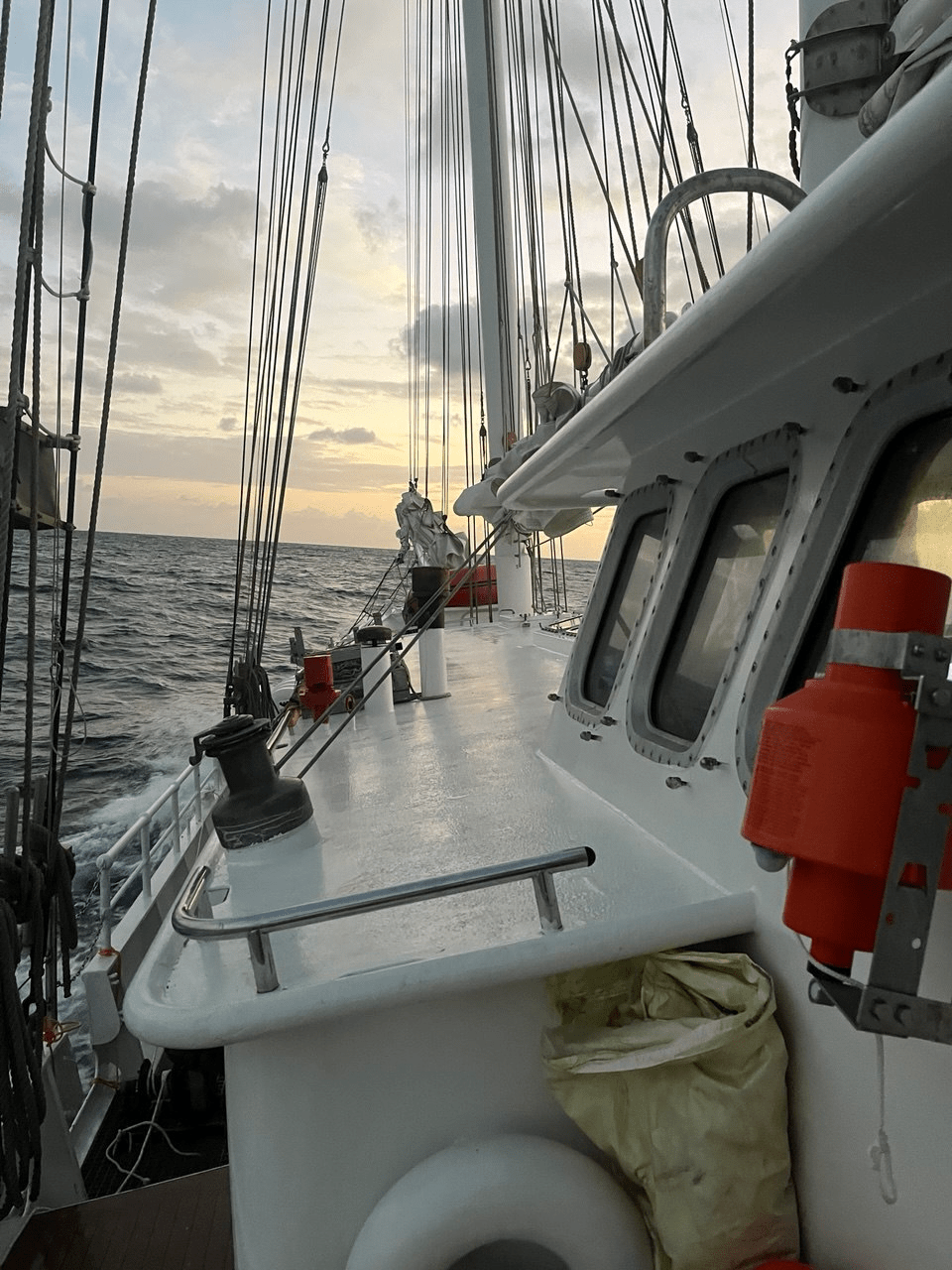
Across the Tropical Atlantic — Notes from the Third Expedition
Despite the Ministry of Science’s continued lack of understanding of the importance of biological research in the open ocean, our work goes on — as before, thanks to the support of the Russian Science Foundation (RSF). This was our third voyage, and our route this time lay across the tropical latitudes of the Atlantic, from Mindelo (Cabo Verde) to Recife (Brazil). The main goal of the expedition was to study the productivity and plankton stocks in one of the least explored regions of the Central Atlantic.

Station layout: green circles mark phytoplankton sampling sites, while green circles with black centers indicate additional zooplankton stations.
In our previous cruises, we focused on refining deep-sea zooplankton sampling techniques. This time, however, we turned our attention to the epipelagic zone — the sunlit upper layer of the open ocean, where most of the primary production takes place. During the expedition, we measured water transparency using a Secchi disk, recorded temperature profiles, and collected phytoplankton samples down to 70 meters and zooplankton samples down to 200 meters.
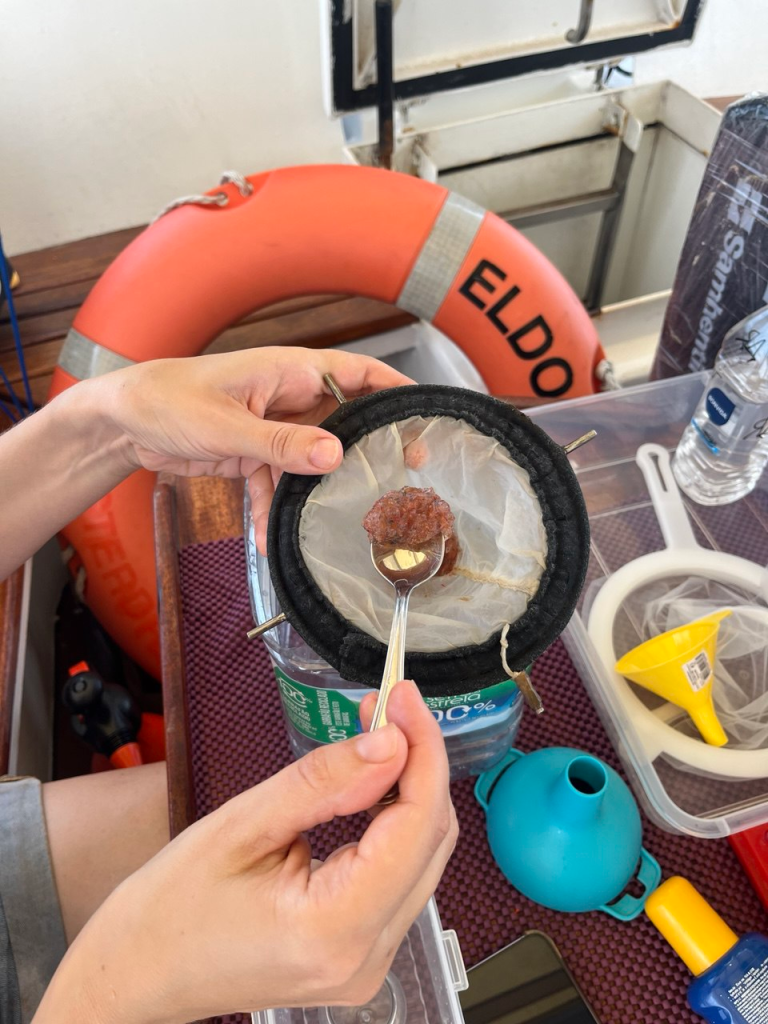
The epipelagic layer of equatorial waters proved to be rich in zooplankton — a vivid reminder of how dynamic and productive the surface ocean can be, even far from continental margins.
The main methodological outcome of this voyage was confirmation that small sailing vessels can serve as fully functional platforms for integrated oceanographic research — compact, but scientifically meaningful.
This means that even today, despite all logistical and institutional limitations, it is entirely possible to study ocean productivity processes almost anywhere in the world’s oceans — provided there is a combination of scientific enthusiasm, a cohesive team (and ours certainly was), and, ideally, favorable weather (which, as usual, was not always the case).
Over the course of the cruise, we obtained 36 phytoplankton samples, 14 zooplankton samples, and several dozen temperature profiles. Combined with satellite observations and Bio-Argo float data, these results will help refine our understanding of organic matter transformation in poorly studied oceanic regions.
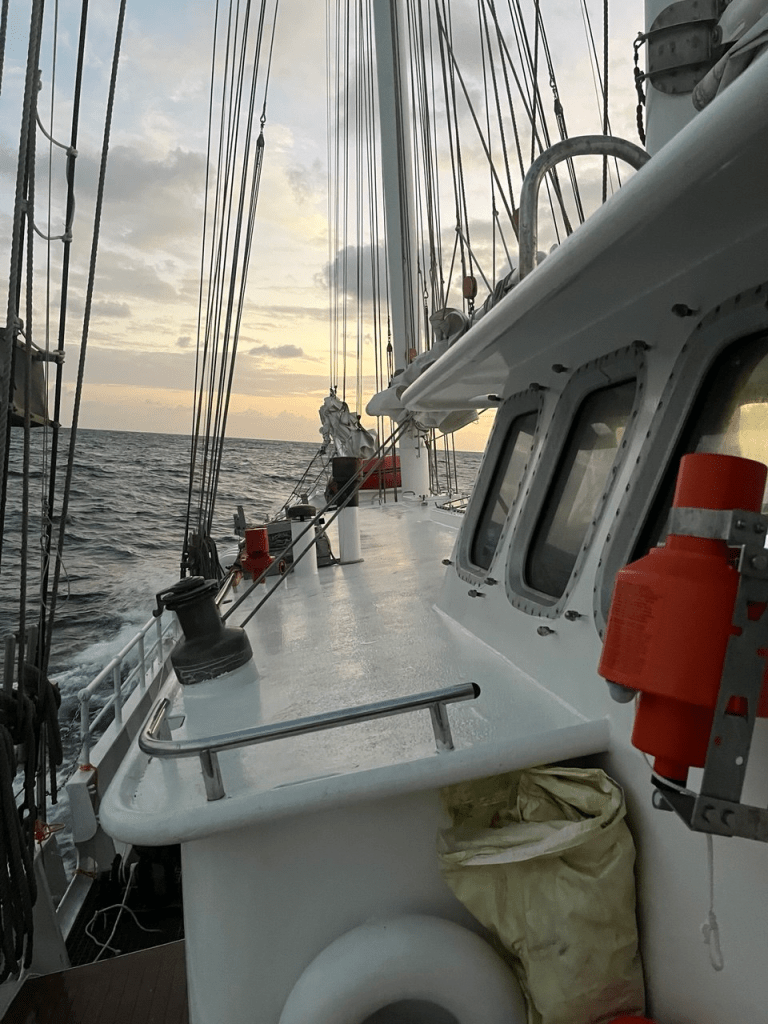
Onward — to the next station.
As in our previous voyages (2020 — in the midst of the pandemic, 2022 and 2023 — under complex geopolitical circumstances), the logistics of this expedition were far from simple. It was necessary to deliver deck equipment to the vessel and adapt it to new technical and environmental conditions. Every new yacht brings new specificities, new solutions, and new challenges.
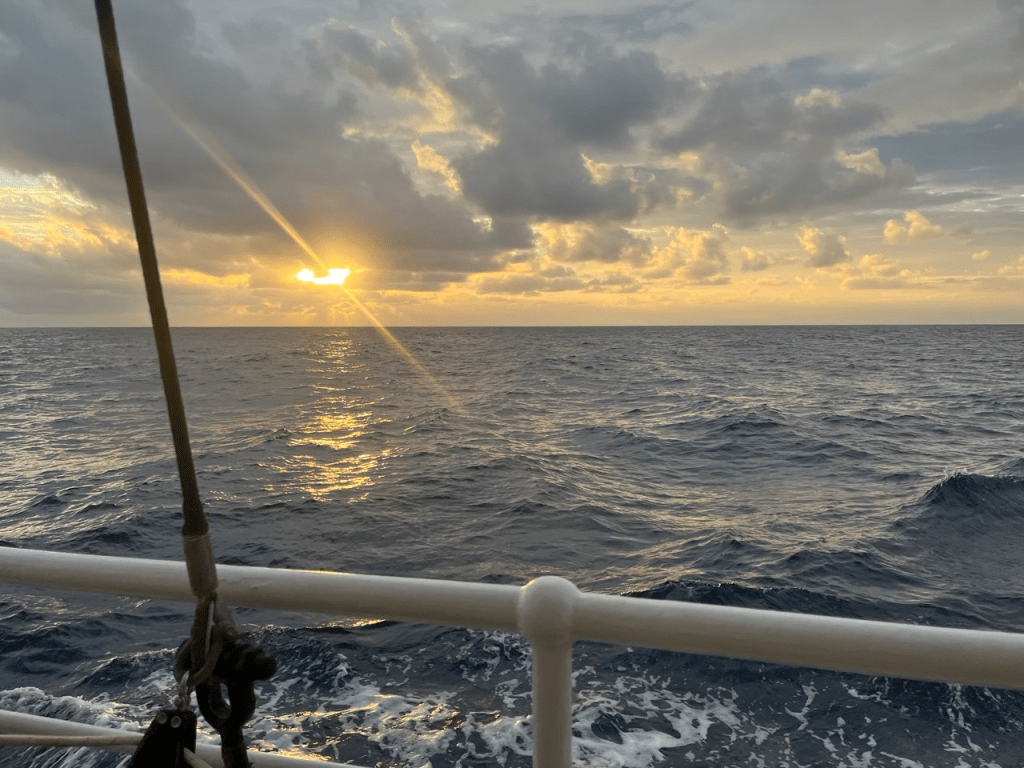
All these challenges were overcome, and we are already preparing for our next expeditions in 2026.
In conclusion, we express our sincere hope that one day the Ministry of Science will recognize that Russia is a maritime nation, and understand the importance of biological research in the open ocean. A dedicated cruise aboard a large research vessel, with a full suite of in situ environmental measurements, remains essential for linking yacht-based data to the broader oceanographic context.
Laboratory of Structure and Dynamics of Plankton Communities
Project: “Tropical and Subtropical Plankton of the World Ocean from Surface to Depth: Biodiversity, Stocks, and Links to Climate Processes”
RSF Grant № 25-77-30002 — “Research by World-Class Scientific Laboratories in Support of Russia’s Scientific and Technological Development Priorities”
 Laboratory of Plankton Communities Structure and Dynamics