
We have rounded Cape Agulhas, and now we are in the Indian Ocean. There is not much to tell about the Atlantic: a strong headwind, a strong head current, and we tacked under engine at 3–4 knots. For almost two days we tried to get used to the motion, led by Captain Dan, but never quite managed it. The overall feeling was of a big ship in a heavy storm: strong, though not the strongest. The amplitude of the rolling is small, but its frequency wears you out. Short, feverish dreams and the familiar howl of the engine shaft under the cabin floor.


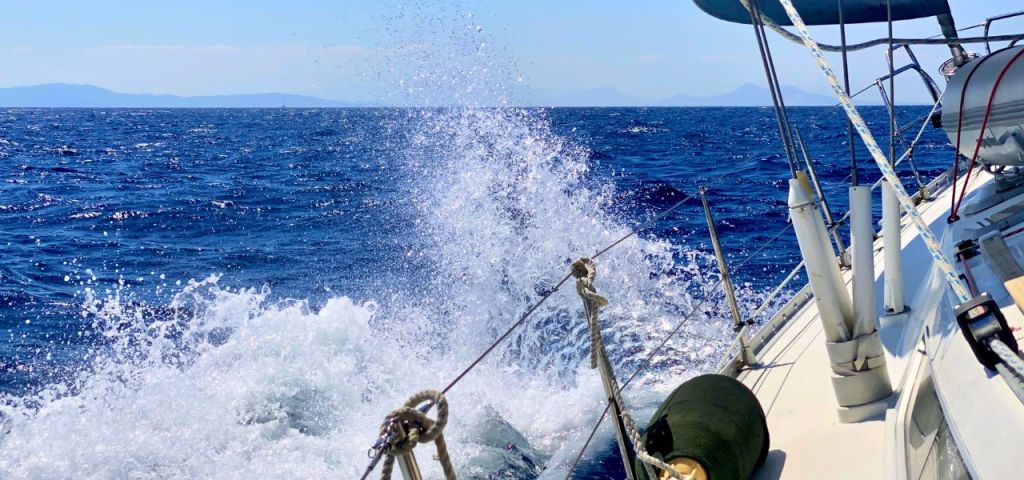
Before Agulhas we set a small staysail (the “baby”), then added a second one, the yankee. So, under the yankee and the baby staysail, we entered the Indian Ocean. The captain woke up and we set the mainsail, and our speed immediately rose to 8 knots. The final touch was to switch off the engine, leaving only the splash of the waves and the occasional blow of a single swell charged with Antarctic strength and malice. There is no whistling of the wind or creaking of the rigging, so the weather must be good. And so, “only in the harness of the winds, without tormenting the water with propellers”, on a beam reach, we burst into the 23-degree waters of my favourite ocean.
So what happened in the Indian Ocean? The following wind soon died down and the harsh Agulhas routine began: headwind, head sea, 5 knots, and that only by tacking. A few moments stand out like rare pearls.
Swimming under sail. You need a good wind so that the engine can be switched off and the yacht goes under sail alone. You are tied into a climbing harness and step overboard. You swim on a rope behind the yacht at 8–10 knots and enjoy life.
Swimming without sail. You need good weather, the engine off and the sails lowered. You take the end of a long, thick halyard hanging from the mast, climb with it to the very bow, wait for the right heel of the yacht and leap overboard with all your might. Experienced hands fly on the rope in an arc along the whole length of the yacht and let go only just before the stern. We, of course, were simpler about it and let go of the rope as soon as we had swung clear of the side.
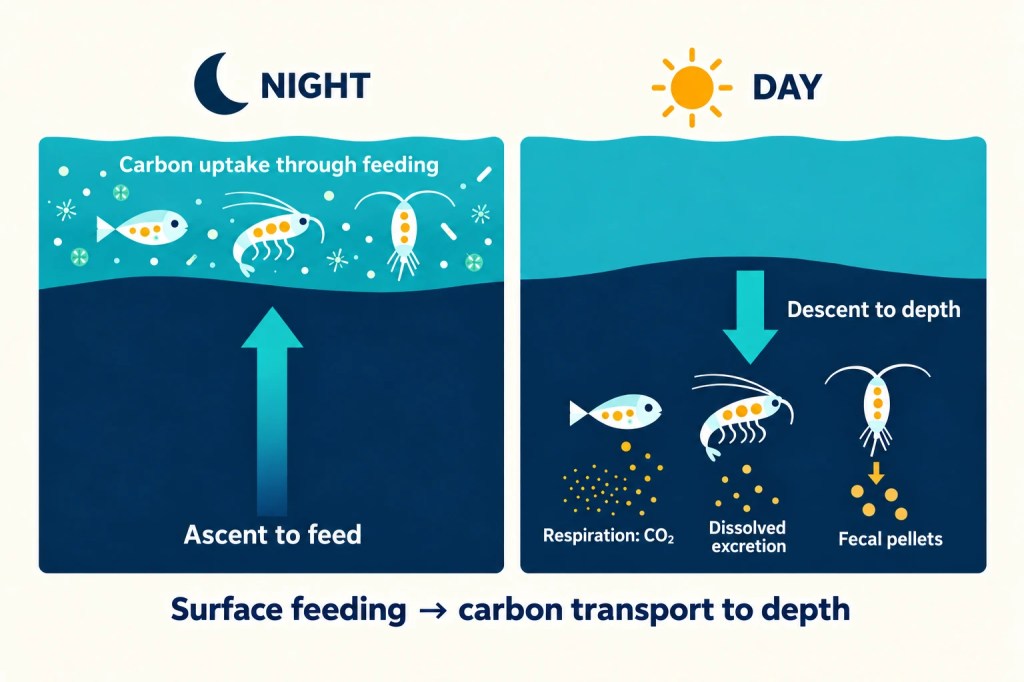
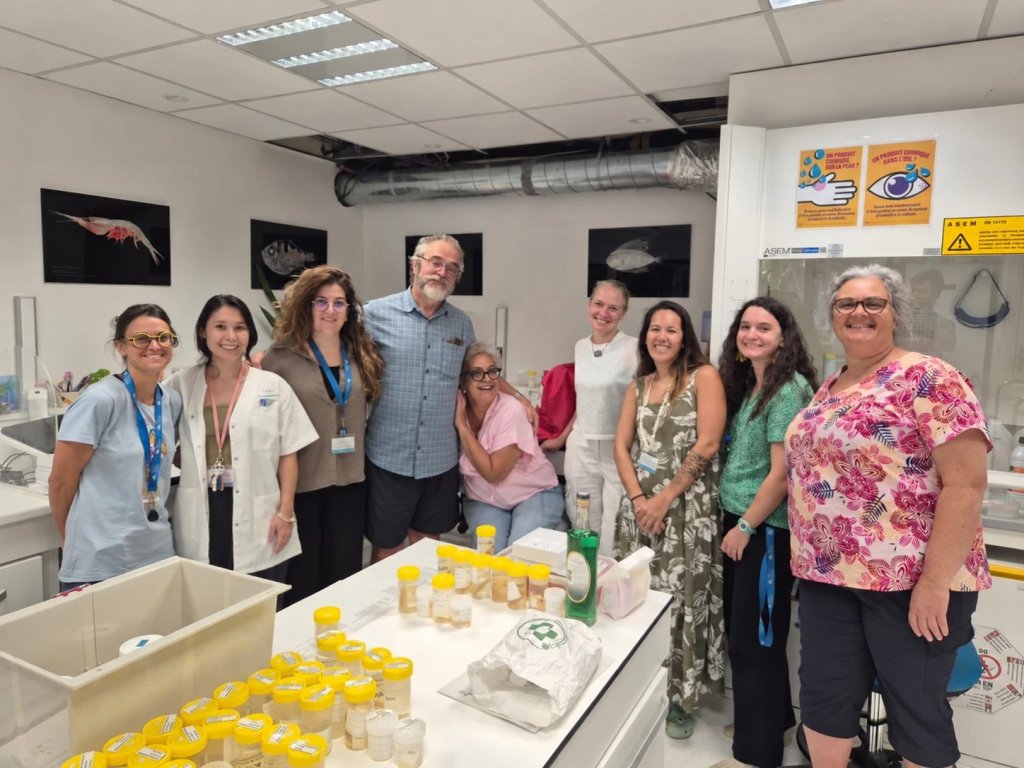
Taking samples. You need good weather (when do you not?) and the sails lowered. The net is attached to the sheet and hoisted with a hand winch, loaded, and lowered into the water through a purpose-built power block fixed to the side. It is lowered by hand and hauled up by an electric winch. We took a trial sample of the upper 50 m and, despite it being daytime, pulled up a soup of copepods and chaetognaths, with a little of everything else. We rejoiced over the catch together with the crew and fixed it all (the catch and the crew) with alcohol.
At one point the wind picked up and we put into Port Elizabeth for a day to wait out the storm. This is exactly the place where we were supposed to board the yacht had it not been for the coronavirus restrictions. It is just as well that did not happen, as the town is nothing special. The white population is 5%. The only safe place is the city beach. The captain and the deckhand decided to take a taxi to the centre to look at souvenirs, and the locals almost dragged them out of the taxi and nearly carried them off as souvenirs themselves. Luckily the taxi driver was a nimble one.
At night lightning flashed over Lesotho (the mountains rise right nearby), mostly horizontal for some reason, the wind whistled over the bay, and only the fearless (and probably very hungry) squid boats shone their lights out at sea. What they felt out there only the squid know. In the morning we put to sea: it was time, at last, to make history.



Leave a Reply